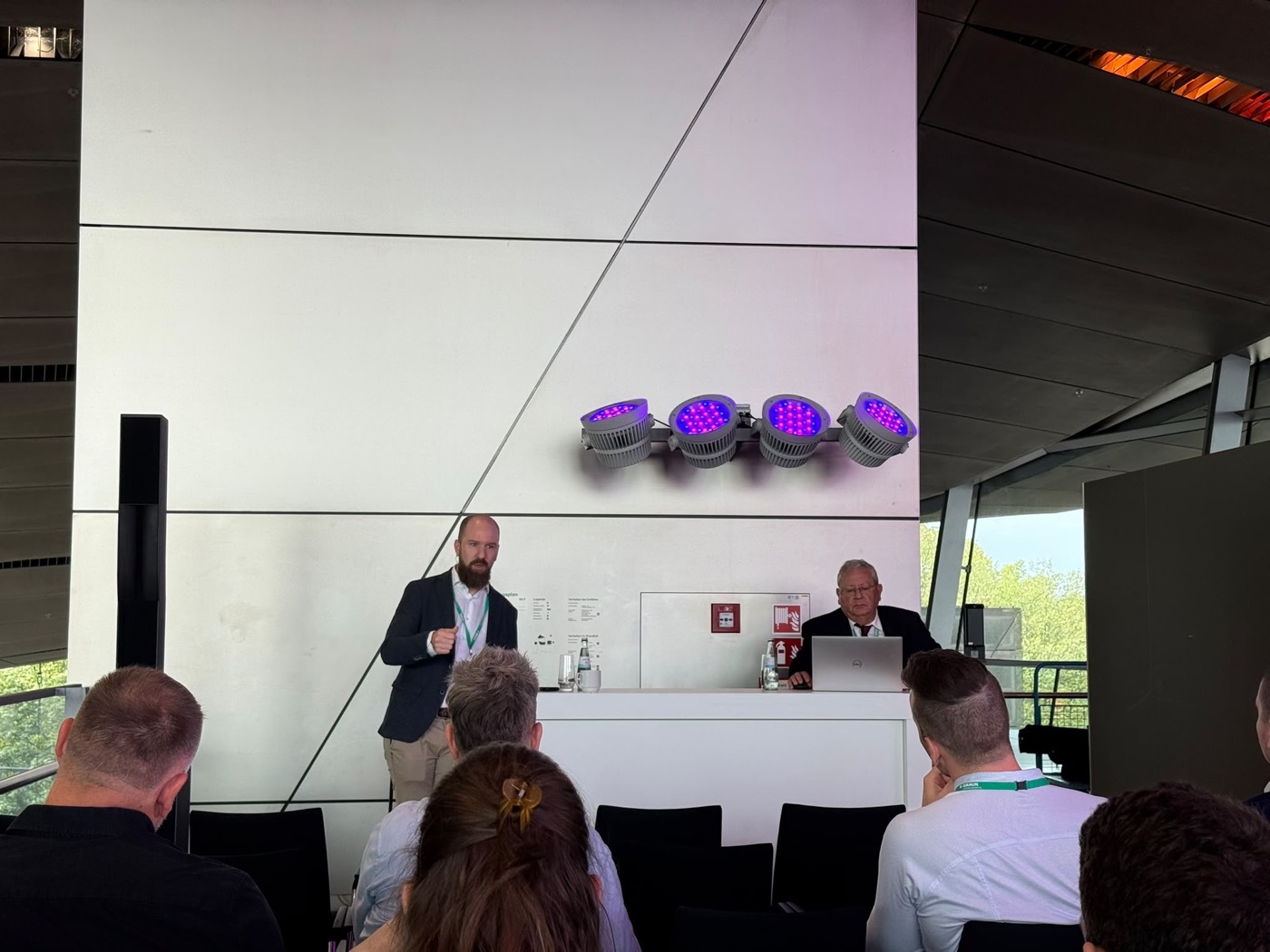
Matthias Verstraete, PhD, our Chief Executive Officer, debated the role of artificial intelligence in orthopaedics with Dr. Hani Haider at the meeting of the International Society for Technology in Arthroplasty (ISTA). Prof. Markus Wimmer, president of ISTA and chairman of the conference, chaired the session.
Why the question is worth debating
There is plenty of enthusiasm for machine learning in orthopaedics, and plenty of scepticism. Both are fair. A model that segments an image or suggests an implant position saves a surgeon real time. The same model, wrong and unchecked, quietly moves the decision away from the person who answers for it.
Where we stand
Our position is that the patient is the final validation, and AI cannot make that step unnecessary. No model, however good, closes the gap between a plan that looks right and a knee that still works a year later. What AI can change is something else: how personal the care gets.
An analogy we keep coming back to: almost nothing is handwritten any more. A thesis is typed, typeset and printed, and nobody misses the copyist. The signature at the bottom is still done by hand, with a pen, by the person who answers for everything above it. We did not forget how to write. We kept it for the part that carries responsibility.
Clinical software is heading the same way. The thesis, meaning the modelling, the measurement and the reasoning about what a particular knee will do, will increasingly be written by AI, and it will be better for it. The signature stays human and still has to be earned: the experiments, the clinical evidence, the surgeon who decides, the patient who lives with the result. A model can make the case. Only an outcome signs it off.